
Jellyfish
Meet Jay the Jellyfish
Learning to swim independently — paddles, kicks and the water safety skills that matter most.
Swimming on their own
Paddle and kick
Working towards paddling and kicking independently.
Floating
Floating on the front and back.
Safe entries and exits
Getting in and out of the pool safely.
Jump in, turn, find the wall
So if they ever fall in, they know what to do.

What they need to move up
- Paddling and kicking with their eyes in the water for about 5 metres
- Jumping in, turning around and finding the wall on their own
- Floating on their back — a bonus
Every child moves at their own pace
Your child's teacher will let you know how they're going, and you can ask anytime.
Want them moving through faster?
Swimming is all about repetition and exposure. The more often your child is in the water, the quicker skills stick.
Half an hour once a week isn't a long time, and it's a whole week before they're back in the pool practising again.
That's why kids on two lessons a week, or in our holiday intensives, usually move through the levels faster.
How we assess and keep you updated
Assessment weeks
Weeks one and two of every school term. Your child’s teacher assesses them in week one, and swimmers close to passing are checked by our deck supervisor in week two.
Teacher feedback week
Every six to eight weeks. Ask your child's in-pool teacher anything about their level and what to work on.
Think they're ready?
Speak to reception or your child's teacher and we can arrange an assessment before the next one.
Little things that make a big difference
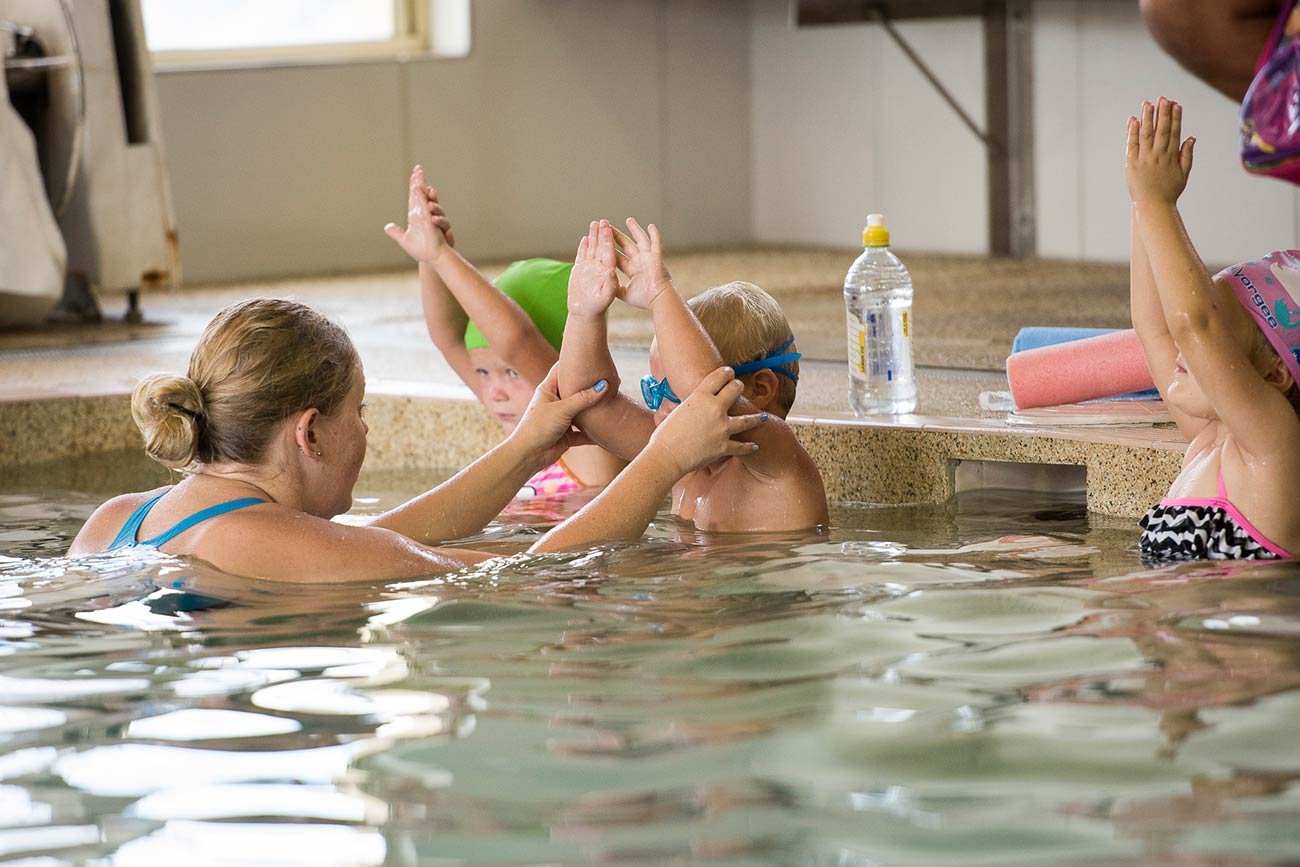
Eyes and head under the shower
Get them used to water running over their eyes and head under the shower nozzle.
Find the gems
Pop on goggles and drop sinking gems in the bath, then have them put their head under to find them.
Paddles in the mirror
Have them practise their paddles standing in front of a mirror so they can see what they're doing.
Kick off your shoes
Practise relaxed kicks like kicking off shoes at the front door. Loose ankles, not big splashes.
What to bring
Goggles — definitely recommended
Swim cap — recommended, not compulsory
Help them progress faster
More time in the water means more repetition — and that's what makes new skills click.
Questions go straight to your centre manager.